
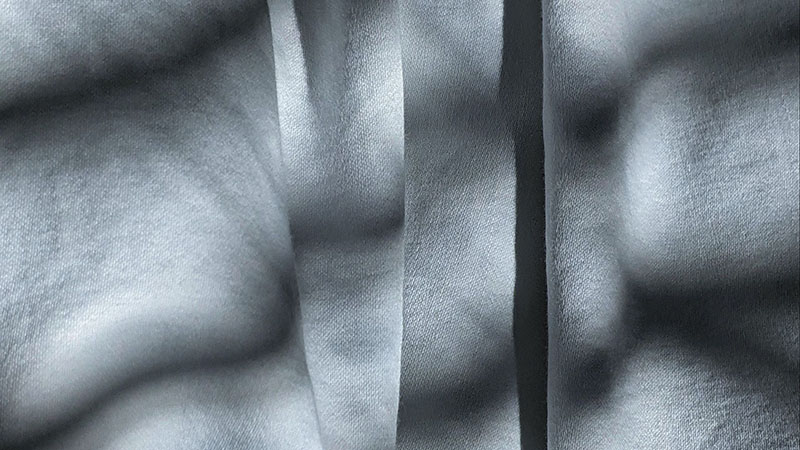
Cotton
Linen fabric is woven from natural cotton fibers or a combination of it with other fibers. This type of fabric is produced in different weights; its thin and light type is an ideal choice for the summer season due to its coolness and high moisture absorption, while its thicker type is more useful in cooler seasons.
Also, lycra (stretch) linen fabric is considered a suitable option for sewing comfortable clothing such as pants and coats due to its elasticity.
Linen has a wide range of uses due to its natural texture; from producing all kinds of shirts and pants to sheets and towels. Of course, it should be noted that this fabric is somewhat wrinkled and requires more care in maintenance.
Denim
Denim fabric is produced from pure cotton or a combination of cotton and elastic fibers. This fabric is one of the popular choices in clothing production due to its strength, high durability and medium to high thickness.
The lighter type is suitable for sewing shirts and summer dresses, while thicker jeans are a great choice for producing pants, jackets and fall clothes.
Stretch jeans are also very popular for everyday wear, especially absorbent clothes, due to their high comfort and flexibility. This fabric is also used in the production of pants, jackets, bags and even shoes.
Linen fabric
Linen fabric is woven from linen yarns and other natural fibers and is a very suitable option for use in hot seasons such as spring and summer due to its cooling and flexible properties. This fabric is one of the popular choices in the clothing industry due to its natural characteristics, both in terms of appearance and functionality.
Patterned Fabrics
These types of fabrics are produced using various yarns such as cotton, polyester, wool, spandex, etc. and are offered in different designs with different grammages to suit different seasons. The high variety in design has made these fabrics a suitable choice for a variety of clothing styles.
Printed Fabrics
Printed fabrics can be made from a variety of fibers and textures. These fabrics are designed and produced in various grammages from very thin to thick, for various applications in different seasons. Flexibility in material, design and weight has made this type of fabric one of the most widely used options in fashion and clothing design.
The process of producing plain weave fabric (Plain Weave) includes several steps, from yarn preparation to weaving and finishing the fabric. Due to the simplicity of the plain weave pattern, this process is economical and applicable on a large scale.
Fiber Preparation
Fiber Selection: The process begins with the selection of fibers (usually cotton, polyester, cotton-polyester blends, silk, or bamboo). For example, Egyptian cotton is preferred for luxury fabrics due to its long fiber length.
Washing and Cleaning: The raw fibers are washed and cleaned of impurities (such as grain or debris).
Carding and Combing: The fibers are arranged in parallel using carding machines, and in combing, short fibers are removed to produce a more uniform yarn.
Spinning
Yarn Conversion: The carded or combed fibers are spun into yarn. This process can be done in different ways (such as ring spinning or open-end spinning).
Yarn Count Adjustment: The thickness of the yarn (yarn count) is adjusted based on the end use. For flat-weave sheets, thinner yarns (such as 40s or 60s) are chosen for their softness and high density.
Preparation for weaving
Warping: The warp (vertical) yarns are placed parallel on the loom. These yarns should be in uniform tension and free of knots.
Sizing: Sizing agents (such as starch or polymers) are used to increase the strength of the warp yarns against weaving tension.
Weft preparation: The weft (horizontal) yarns are prepared on the bobbins to be used in the weaving process.
Weaving
Weaving machine: Flat-weave fabric is usually produced on shuttle or shuttleless looms (such as rapier, air-jet or water-jet). The flat weave pattern is created by passing the weft thread over and under the warp threads.
Thread Count: The thread count is adjusted at this stage. For high-quality bed linen, the count ranges from 200 to 1,000 threads per square inch.
Quality Control: The fabric is checked for defects (such as tears or unevenness) during weaving.
Fabric Finishing
Desizing: The sizing agents are washed out of the fabric to make it softer.
Bleaching: For white or light-colored fabrics, chemicals are used to whiten.
Dyeing or Printing: The fabric can be plain dyed or patterned. Reactive dyes are popular for cotton because of their color fastness.
Softening: Softening agents are used to increase the softness of the fabric, especially for bed linen.
Sanforizing: To reduce shrinkage of the fabric after washing, a sanforizing process is applied, which subjects the fabric to pressure and heat.
Inspection and Packaging
Final Inspection: The fabric is checked for quality, color uniformity, and defects.
Cutting and Packaging: The fabric is cut to the desired dimensions and packaged for various uses (such as sheets or bedspreads).
Expert Tips
Standards: For high-quality flat-weave fabrics (such as luxury sheets), standards such as Oeko-Tex are used to ensure the absence of harmful substances.
Modern technologies: Advanced weaving machines allow for the production of fabrics with high densities and more detailed patterns.
Environmental impact: The use of organic fibers (such as organic cotton) and low-energy dyeing processes is common to reduce environmental impact.